
Disclaimer: The RCA Studio II design has been done, but it has not been tested. The Rev0 cartridge is schematic- and layout-complete and the firmware and software run in emulation, but no board has been built and nothing has run on a real Studio II yet. We could use some help validating and testing the design: reviewing the schematic and layout, building Rev0 boards, and trying the firmware and software on real consoles. If you can help, please get in touch on the FujiNet Discord.
Status
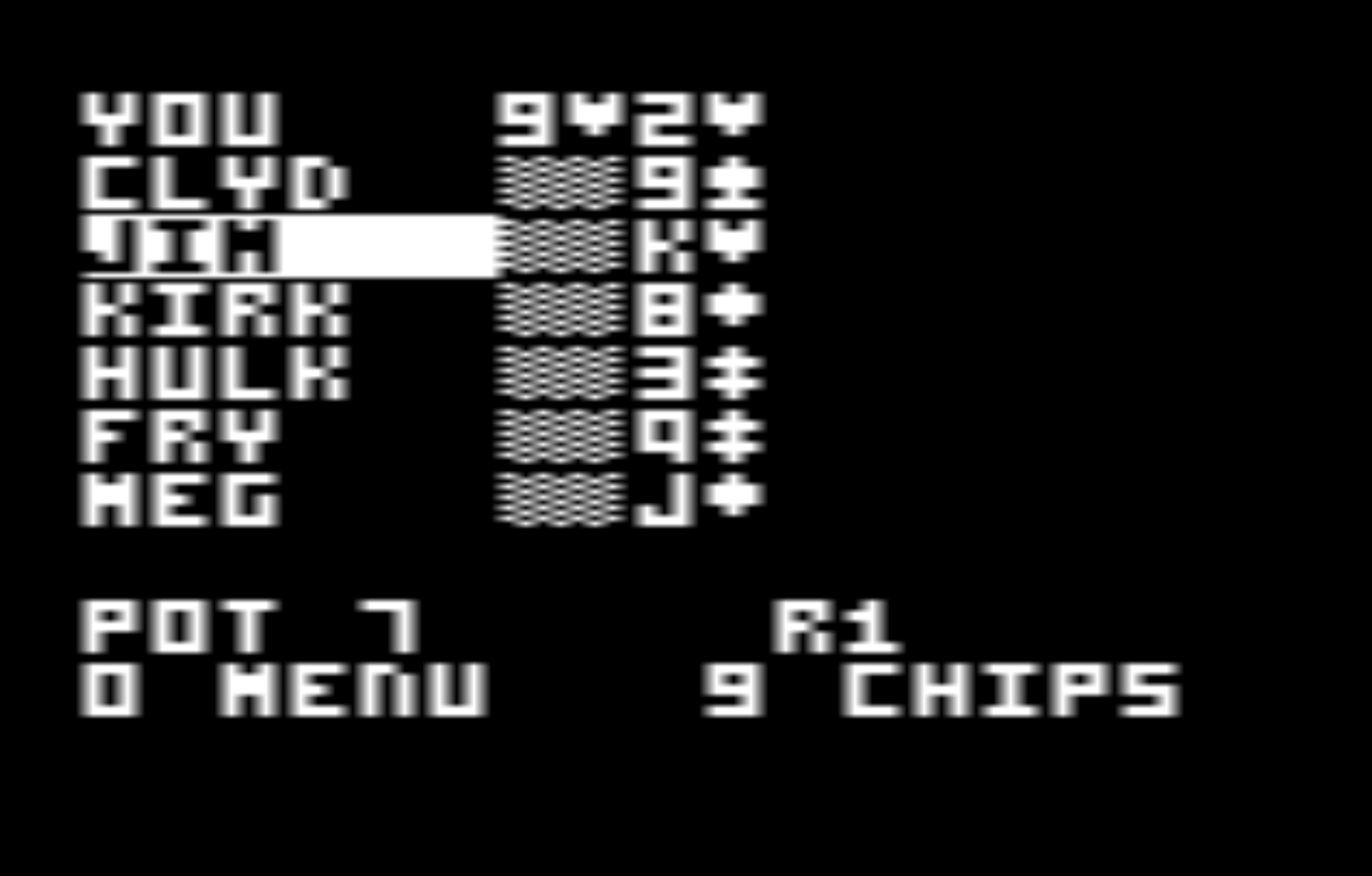
The firmware and software for the RCA Studio II bring-up are now working in emulation (a patched MAME, against FujiNet-PC). CONFIG is built into the cartridge and comes up at power-on; it browses host slots and directories, and cartridge images load over the network. 13 commercial game images were checked three ways, and all 13 pass each: the screen matches MAME’s own cartridge frame for frame, the machine is in the same state as after a power-on when the game starts, and each image runs after being pushed from FujiNet-PC over the network. 5 Card Stud Poker has played live hands on the public server, and Battleship has played against a local server. The Rev0 cartridge is fully designed but has not yet been built, so nothing has run on a real console yet.
Firmware
Current firmware can be pulled from https://github.com/FujiNetWIFI/fujinet-firmware
The cartridge is a new design: an RP2354B behind a 74HCT541, which serves the CDP1802 bus in software. The cartridge edge has no write strobe, so the console talks to the cartridge through the address of each read. The edge does carry the full address of every read, and a CART CS line that turns the console’s RAM off, so the cartridge can claim whole pages anywhere outside the BIOS, including the display the CDP1861 fetches by DMA. FujiNet programs draw through a 64×128 display served by the cartridge and a 16×10 text engine with 2×3 mosaic cells; games use the console’s own display as usual. It takes .st2 and .bin images.
The RP2354B section of the firmware is in pico/studio2/firmware. Build instructions in pico/studio2/README.md
The ESP32S3 version of the firmware can be built with:
./build.sh -s fujiversal-studio2
./build.sh -cbufm
The ESP32S3 build does not yet embed the RP2354B firmware; build the cartridge firmware separately in pico/studio2 with ./build-cart.sh. The ESP32S3 pin map matches the Rev0 board, but does not declare the RP2354B RUN/BOOTSEL lines yet (Rev0 wires them to IO4/IO5). The first things to check with a scope on real hardware are the width of the gated TPA and the address settle time, the CART CS timing against the console’s RAM, and the power-on race (the BIOS reaches $0400 about 50 ms after power-on).
Hardware
Current PCB has been laid out by Thomas Cherryhomes in KiCad: https://github.com/FujiNetWIFI/fujinet-hardware/tree/master/RCA-Studio-II/FujiNet-StudioII-Rev0
Rev0 is an all-in-one, 4-layer board for the 22-pin Studio II cartridge slot (RP2354B, ESP32-S3, USB-C and microSD). Up to the shell posts it uses the outline of FliP’s (Philip Marien’s) Studio II multicart, then grows 28 mm taller for the ESP32-S3, so an original shell does not fit. case/FujiNet-StudioII-Shell.scad is a printed two-piece shell; its size is estimated, not measured on an original. The board is schematic- and layout-complete and packaged for JLCPCB, but has not yet been built. Every part was in JLCPCB stock when it was packaged, though the RP2354B’s core inductor was down to 24. The cartridge runs from the console’s 5 V, or from USB-C when it is plugged in. Whether the console’s 7805 can carry the cartridge while it is on WiFi has not been measured; if it sags, run the cartridge from USB-C.
There is no DIY option yet; until boards are built, the Studio II side can be tried in emulation with a patched MAME: pico/studio2/emu/apply.sh adds the FujiNet cartridge to a MAME source tree, and pico/studio2/run.sh runs it against FujiNet-PC.
Software
Current FujiNet Software Ported:
| Program | GitHub |
|---|---|
| Config | https://github.com/FujiNetWIFI/fujinet-config in studio2/ |
| 5 Card Stud Poker | https://github.com/FujiNetWIFI/fujinet-5cardstud in studio2/ |
| Battleship | https://github.com/FujiNetWIFI/fujinet-battleship in studio2/ |
The Studio II programs are standalone CDP1802 assembly, built with Macroassembler AS; there is no fujinet-lib target for the Studio II. All three have been merged.
FujiNet Go
There is no FujiNet Go for the Studio II yet; use the patched MAME described under Hardware.